

French Work Culture: Significant Differences from the UK & USA
French work culture is often shrouded in myths, ranging from the renowned 35-hour workweek to the recognition of French workers boasting one of the highest productivity rates globally. As you delve into the intricacies of working life in France, it becomes clear that it deviates from what you might expect. Whether you're considering conducting business in France or contemplating a move to work here, understanding these distinctions upfront is essential. From employee qualifications to social customs like happy hour, let's explore the most notable differences between working in France and the US or UK.
Greeting co-workers
One of the first things you notice when you walk into a traditional French office is that co- workers may greet each other personally. The new arrival will go to each person's desk offering handshakes accompanied by a friendly "Bonjour," and in the case of female colleagues, may even engage in the customary cheek-kissing ritual known as "la bise." Although this practice is waning in French offices with an international presence, it remains a common occurrence. In fact, one female French mayor took to arriving late for meetings as a strategy to circumvent these cheek kisses.
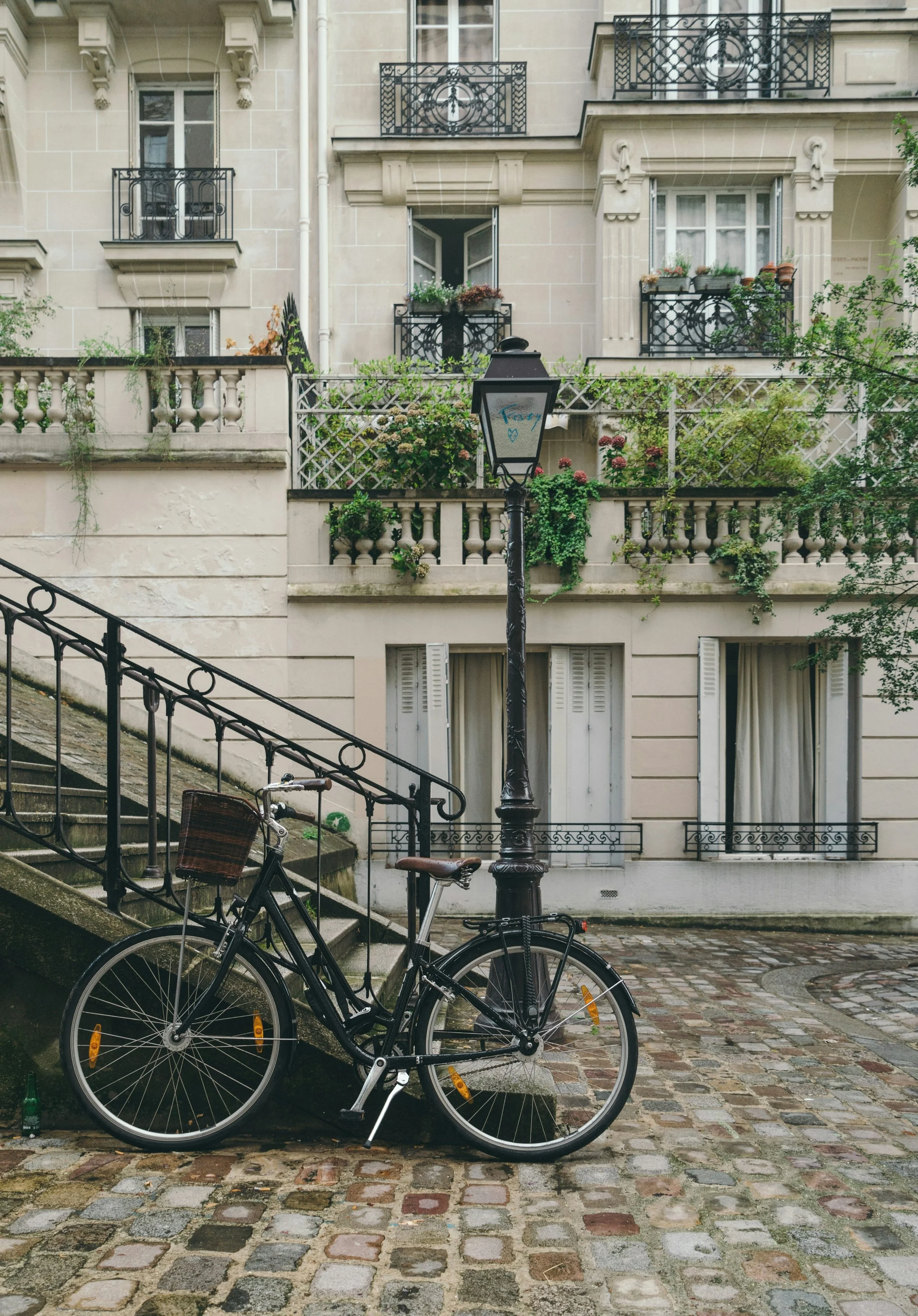
Bicycle propped up against after employee has travelled to work.
Morning arrival
French law requires that most people spend at least 11 consecutive hours away from work, so the morning workday usually starts any time after 8:30 am. Most employees, however, usually drop off their children at school around 8:30 am and then commute to work to arrive between 9 and 9:45 am.
Workplace attire
Unless you're employed at a startup, formal attire is typically the norm in the workplace. Men commonly wear suits and ties, while women opt for smart dress pants or dresses. Makeup and jewellery are kept understated. Even in startup environments or on Casual Fridays, the dress code tends towards business casual, often featuring khakis and city sneakers.
Regular breaks
You might have only just settled into work by 9:30 am, but by 10:15 am, it's customary to take a morning coffee break with colleagues. These "watercooler moments" are considered vital, providing opportunities for employees to discuss the day's agenda and should not be overlooked.
The typical French workday
As previously noted, a typical workday for French office workers begins around 9:30 am, folowed by a coffee break around 10:30 am. Lunch is typically observed between noon and 2 pm, with another coffee break around 3:30 pm. The end of the workday varies based on whether employees track their hours. Despite the misconception surrounding the 35-hour workweek in France, many employees, particularly white-collar workers or 'cadres,' exceed this limit, often remaining at work until around 6:30 pm. Non-cadres, who do track their hours, may leave earlier, but departing before 6 pm is generally discouraged. This extended workday aligns with labour laws requiring employees to spend at least 11 hours outside of office hours, resulting in later morning starts typically after 9 am.
Doing business in France
One of the things that always astonishes foreigners and expats in France is the number of layers of bureaucracy it takes to get things done. There is a reason for this. French employment laws are generally more demanding, with more employee protection and legal constraints.
Along with the size of the French labour code (the famous Code du Travail, which many jokes exist about), large companies in France are usually attached to a syndicate (union). In addition, there is usually a comité d’entreprise, made up of voted-in employees, who must be consulted for all major decisions and are there to speak on behalf of the employees. Some members of the comité d’entreprise will be part of the union, giving them extra leverage. For instance, transitioning accounting software from Quickbooks to SAP requires approval from the comité d’entreprise due to its implications for employees.
Canteens for lunch
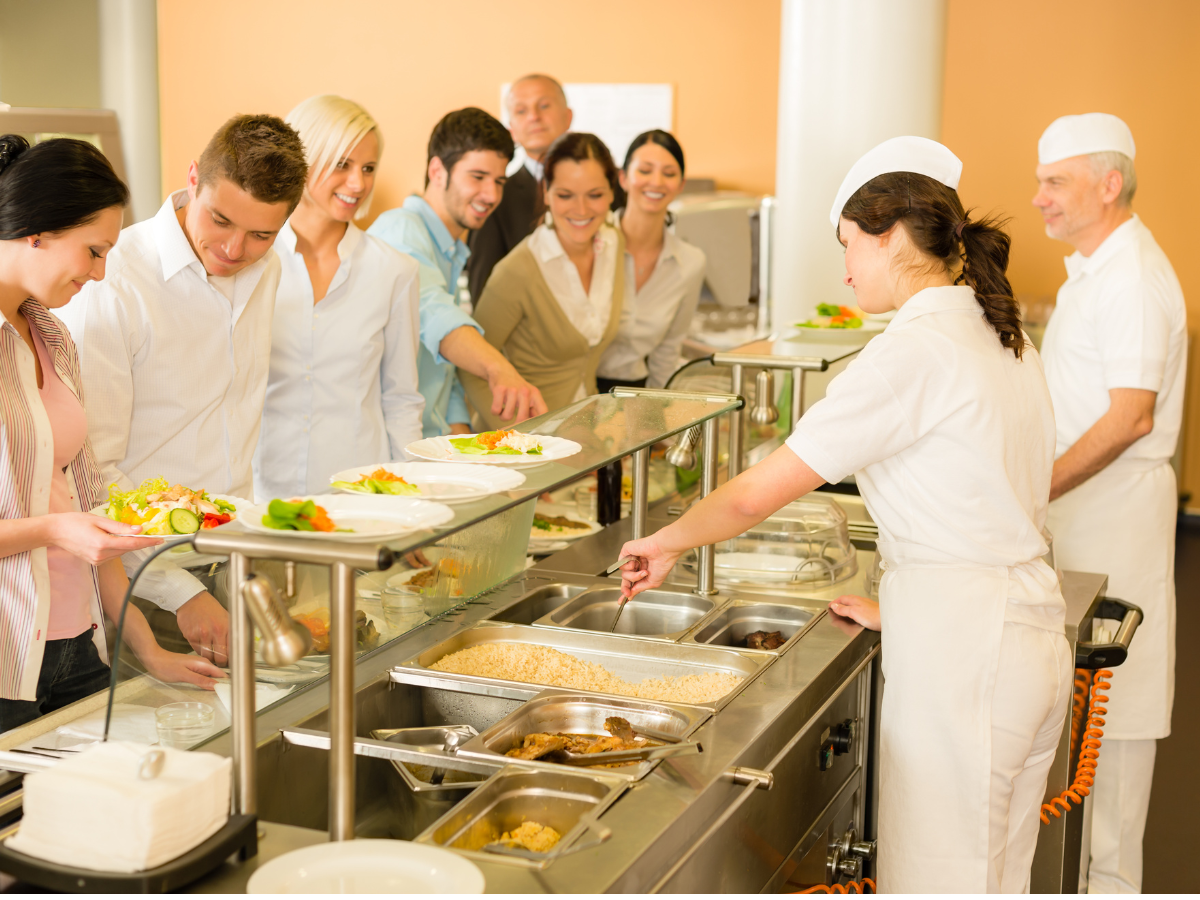
Employees taking their lunch break in a canteen.
One of the differences that always baffles foreigners about French work culture is the idea that employees in France take a 2-hour lunch break and then leave the office late in the evening. (This is the case in Paris-La Defense.) This concerns French labour law, which outlines that French employees should not have lunch at their desks and that the employer must provide some restauration and food options.
Depending on the number of employees, the employer has to offer a heavily subsidized canteen by law, where an entrée-plat-dessert usually comes to around €5-6 euros. Alternatively, the employer can provide food vouchers that can be used at nearby restaurants. Many large employers do both to offer their employees a range of choices. In addition, don’t be surprised to see individual-sized bottles of wine at the canteen. Having a glass of wine with your meal is seen as relatively usual. As you can imagine, that lunch, which is supposed to be a complete meal and not a quick sandwich, will take more than 1/2 an hour. Many employees also head to the gym and run errands during lunchtime.
Workplace hierarchy
French workplaces tend to be more hierarchical than American or British offices. While open space still rules, upper-level managers usually still have individual offices. Employees refer to their direct managers in slang as N+1, N+2, etc., depending on the level above themselves. This hierarchy is maintained for reporting, decision-making, and evaluations.
Formality: tu vs vous?
Navigating the use of formal "vous" and informal "tu" in French can be quite perplexing for language learners. Determining when to employ each form can be particularly challenging in workplace settings, where the rules may seem arbitrary. In such cases, it's often best to observe the language dynamics and follow the lead of others or wait for cues from your counterparts regarding when to transition to more informal language.
Business meetings without decisions
Another interesting difference between French and American business meetings is that, in France, several consecutive meetings are held without any decisions being made. French children learn to question and debate early, and philosophy is a totem exam in high schools in France. This culture of debate carries on into adulthood and the French workplace. Meetings will ask for further information, talking points, items to carry to the next meeting, etc.
Time of the year and National Holidays
A lot of the decision-making in French businesses depends on the time of the year. French people have a minimum of 5 weeks vacation, with most office workers having between 8-10 weeks off per year. July and August summer months will see almost 1/2 of employees off at any given time since a three-week break is practically mandatory.
In addition, months like May and December, which have a lot of public holidays, also run slower than September, for instance. When you add the mandatory school holidays to the mix, the calendar and time of year take on an importance you don't see in North America.
Sundays are for relaxing!
The right to disconnect
In 2017, France introduced a new law called the right to disconnect. Businesses with over 50 employees must let employees disconnect from digital devices (emails, phones, etc.) outside their regular working hours. This means that French managers and employees are not supposed to send each other emails at 10 pm or while on holiday.
No work on Sunday
Along with not working after hours, there are stringent laws on working on Sundays. If you have ever walked around Paris on a Sunday, you will notice that most shops and restaurants are closed except those in authorized areas. This law also carries into French offices. No "coming into the office to do the year-end closing" on a Sunday. Directors and C-Suite offices will receive fines and prison sentences if it is found that employees have been coming into the office on Sunday to work. So, as you can imagine, offices are tightly locked up on weekends. French employees will take their computers home and wrap up a few items, if necessary, but it is not expected and cannot be demanded by the employer.
Sidelined employees “put in the closet”
There is a French concept here called "placardization ", meaning "put in the closet". Once French employees are outside their trial period (around six months after starting), it is challenging to fire them, even if they are performing poorly. Underperforming employees are shifted into makeshift roles with little actual responsibilities and continue to be paid. Employers and employees dread the mise en placard, and many lawsuits and incriminations have surrounded it.
French Business Etiquette: The do’s and don’ts
Business etiquette in France is quite different from other parts of the world. Keep reading to understand the nuances of business etiquette in France and learn how to avoid any potential faux pas.
Arrive on time - If you want to make a good impression in France, it is essential to arrive on time. Not too early (not more than 15 minutes like in Germany), but on the dot.
Expect to hear ‘NON’ - When you ask a question in France, the reflexive answer tends to be "no". It may later become a "yes”, but French people usually say "no" as a placeholder to give themselves time to think about it. Decisions take time; given the debate-style culture, you should expect pushback.
Brush up on French dining rules - If you are headed to lunch with a French business partner or client, it is best to brush up on what to expect. French dining etiquette can be long and complicated, but there are a few basic rules: wait to eat the bread before the meal arrives, don't try to change the meal as prepared by the chef, and don't expect water with ice. If you order a burger, eat it with a fork and knife.
Private life vs professional discussions - French people don’t usually discuss their private lives in detail at lunch, so refrain from asking too many personal questions. Keep topics general with small talk, like what the person did on the weekend or recommendations for things to do around town.
Keep hands on the table - French etiquette is to place your hands on the table, a tradition that goes back to the Middle Ages, when hidden hands could hide weapons. Good manners required hands to be visible rather than on your lap.
Avoid politics, religion, and money - Specific topics are hot potatoes in France, like in other countries. At a polite business lunch, avoiding topics such as politics, religion, and money is best.Most French people are reluctant to discuss these topics even with close family and friends, so this is a no-no in a business atmosphere.
Don’t be afraid to have a glass of wine - Having wine with your meal is seen as relatively usual in France. If your host is having a glass of wine, it is only polite to follow along (unless you don't drink wine.)
In conclusion, navigating the intricacies of French work culture presents a unique set of challenges and opportunities for those accustomed to different norms. From the structured hierarchy to the emphasis on work-life balance, each aspect of working life in France offers insights into the country's rich cultural tapestry. Whether it's understanding the significance of morning greetings or adapting to the pace of decision-making in meetings, grasping these nuances is essential for successful integration into the French workplace. Furthermore, appreciating the importance of holidays, respecting the right to disconnect, and adhering to business etiquette guidelines are crucial for fostering positive professional relationships. As you embark on your journey in the French workforce, embracing these differences with an open mind and a willingness to adapt will undoubtedly contribute to a fulfilling and rewarding experience.